
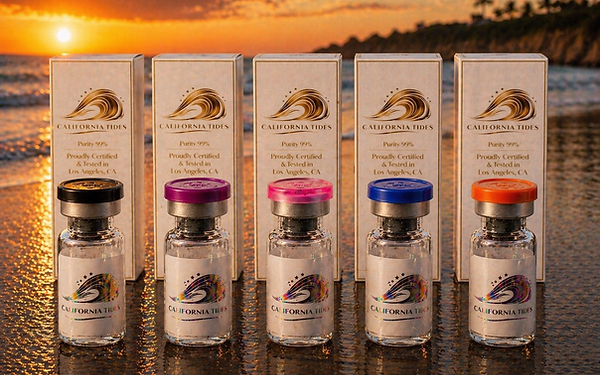


Ipamorelin 10
Key Guidelines:
Aseptic Technique: Clean vial stoppers and the injection site with alcohol pads.
Avoid Shaking: Vigorous shaking can damage the peptide structure.
Storage: Keep in the back of refrigerator, away from light.
Shelf Life: Reconstituted peptides are typically stable for 4–6 weeks in the refrigerator.
Dosage Tracking: Use an insulin syringe with U-100 markings to draw the correct dose.
Storage: Lyophilized: 2–8 °C (35.6–46.4 °F)or freeze at −20 °C (−4 °F); after reconstitution, refrigerate at 2–8 °C (35.6–46.4 °F) and use within ~4 weeks.
Injection method: Subcutaneous (abdomen, thigh, or flank area)
Key Benefits
Body Composition Improvement: Promotes the development of lean muscle mass while simultaneously accelerating the reduction of body fat, particularly stubborn, deep belly fat.
Enhanced Recovery & Healing: Speeds up recovery from injuries, joint pain, and intensive exercise by boosting collagen production and promoting cell regeneration.
Improved Sleep & Vitality: Promotes deeper, more restorative sleep (slow-wave sleep), which in turn results in higher daily energy levels, better mood, and increased strength.
Anti-Aging and Skin Health: Helps reduce signs of aging by improving skin elasticity and, in some cases, contributing to thicker, healthier hair.
Cognitive Function: Users often report enhanced mental clarity, better focus, and improved cognitive performance.
Targeted Hormone Release: Unlike older GHRPs, Ipamorelin stimulates growth hormone release without a significant increase in hunger, cortisol, or prolactin, reducing unwanted side effects.
Medical journal Data
New York medical Doctors
